

We Computers
On my favorite novel of 2025

Last week I started writing a list of my favorite things from 2025 but quickly lost steam. I keep meaning to use this space to write about what I’ve been reading (inspired by lots of folks, but mostly the prolific work of both Chris Corlew and Justin Carter), so here goes an attempt.
Chris (who I just mentioned above, and who I host a silly little poetry podcast with) will be particularly thrilled that the first book I’m going to write about is a novel. I first saw this one pop up in my feed when it was announced as a finalist for the National Book Award in translation, but it’s certainty not something I was clued by my normal reading habits. I thought it had a great a title and a great cover and was curious because its subtitle explicitly compared itself to a traditional form of poetry. I’m pretty quick to request books from my library, but this might have been the fasted I’ve ever pulled the trigger. And to my delight, We Computers, by Hamid Ismailov and translated by Shelley Fairweather-Vega, was easily one of my favorite reads of the year.
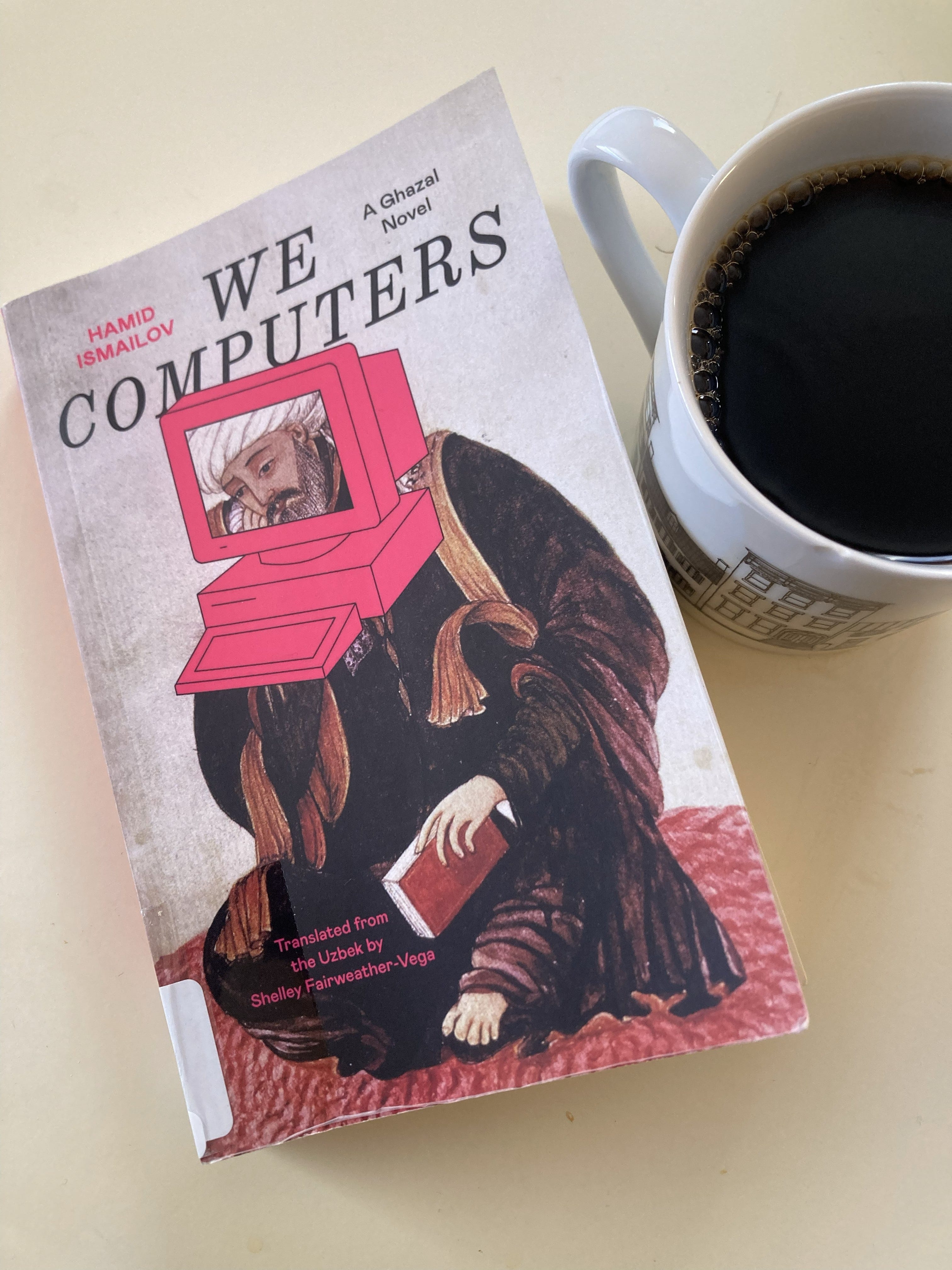
I’d generally prefer to write about poetry and smaller releases here, but I felt really excited just to try writing about We Computers because I’ve had such a hard time talking about it. A friend asked me what I was reading a few days after I’d started it, and just as quickly as I began gushing about the book I also felt such an urge to qualify what I was saying. The book calls itself “A Ghazal Novel.” The Ghazal is a traditional poetic form that originated in Arabic poetry (though in addition to its long history the Ghazal feels pretty distinctly popular in contemporary American verse). Not only is the book explicitly structured after this poetic form, but the the book is about a poet, the history of this poetic form, the impossibility of poetry in translation, and on and on. In short, I guess a National Book Award nomination suggests some other people out there are reading and enjoying this book, but I can’t actually imagine recommending it to someone who doesn’t already really care about poetry. There are definitely other entry points, but this felt like a distinctly nerdy read that tugged at all sorts of ideas I know I’m excited about but don’t immediately bring up at parties.
One place my mind went while reading We Computers was to one of my favorite poetry collections of the past few years, Madness by Gabriel Ojeda-Sagué. From the poet’s website:
Madness is the selected poems of a fictional poet, Luis Montes-Torres, a gay Cuban exile who makes a name for himself in the world of poetry before the contours of his ordinary life become overwhelming, stilted, and impossible. The poems and biographical commentary reveal the unpredictable wavering between anxiety and attachment, between the political and the personal, that accompanies any American life marked by difference.
The key word is “fictional.” The poems in the collection are presented as written by a fictional writer, and the collection itself is presented as that poet’s Selected Works. I already loved the premise, but I was so pumped to find the poems in the latter part of the collection eventually come from books published in the future. The fictional poet responding to future climate catastrophe gave the collection a loose sense of science fiction, which is something I’ve long been curious about capturing in a poetry collection.
But that’s besides the point. What’s important is that you might notice how quick I am to write about the structure and narrative and conceit of the collection rather than the poems themselves. I adored this collection, but one of the ways it continues to itch at my brain is that I can’t disconnect the overarching metanarrative from the individual poems. I really like Ojeda-Sagué as a poet! And I trust that I would’ve enjoyed reading the poems for their own merit. But I was so taken by the the conceit of writing the selected works of an imaginary poet that I can’t help but wonder what my experience of the collection and the individual poems would’ve been like without the conceit coloring my reading.
I felt a similar itch with We Computers. The novel is also, on an overly simplistic level, about the life of a fictional writer named Jon-Perse. He lives in Paris, works as a psychologist, edits for a literary journal, and through his friend (winkingly referred to as AI) becomes obsessed with Ghazels and Persian poetry. But the big narrative of his life is constantly interrupted with retellings of historical and literary stories, translations of poems, computer generated imaginings of a historical poet’s biography. Jon-Perse is distinctly the main character of this novel and his story propels the narrative, but I imagine the actual page count dedicated to his story is less than half of the novel.
And while I immediately connected with the novel and was enjoying the read, I found myself unsure of what to do with the digressions. I hesitate to even call them digressions because they are so critical to what the novel is trying to do. I mean, they’re a substantial part of the length of the novel—they can’t just be digressions or distractions. And I was fascinated in them! But I was also compelled by Jon-Perse and trained to read novels in a way where that compelling character demands my attention. I found the digressions at times hard to follow because they rarely felt clearly connected to what had just preceded them in the narrative. This dissonance followed me throughout the book.
I don’t fully understand how Ismailov used the form of the Ghazel to shape the novel, even though the narrators do directly recognize the choice, but I think this disconnect is part of why the novel was so exciting for me. It took me a while, but it very much felt like the book was teaching me how to read it as I went. Yes, Jon-Perse’s life was the jumping off point for the narrative, but the work of the book was so much more than that. I constantly felt myself wondering among the digressions what parts were actually translated poems or stories and what parts were freshly imagined for the novel. The translator’s note points to this ambiguity—recognizing that all the translated material in the novel is identified while I think also suggesting that the sort of collage created by stacking all of these texts on stop of each other was part of point. (Side note: I think it’s also critical here to point out that at many points the translator Fairweather-Vega was translating Ismailov’s own translations, which is so rad)
What I’m trying to say is: I deeply enjoyed reading this novel even though I’m confident I misread or misunderstood or simply missed so much of what it was doing. I was both dazzled and distinctly felt like I couldn’t fully wrap my mind around all its moves.
And somehow I’ve written this much without getting to the AI of it all.
I’m genuinely so sick of thinking about AI. As highlighted in this incredible merch from the band Gay Meat:
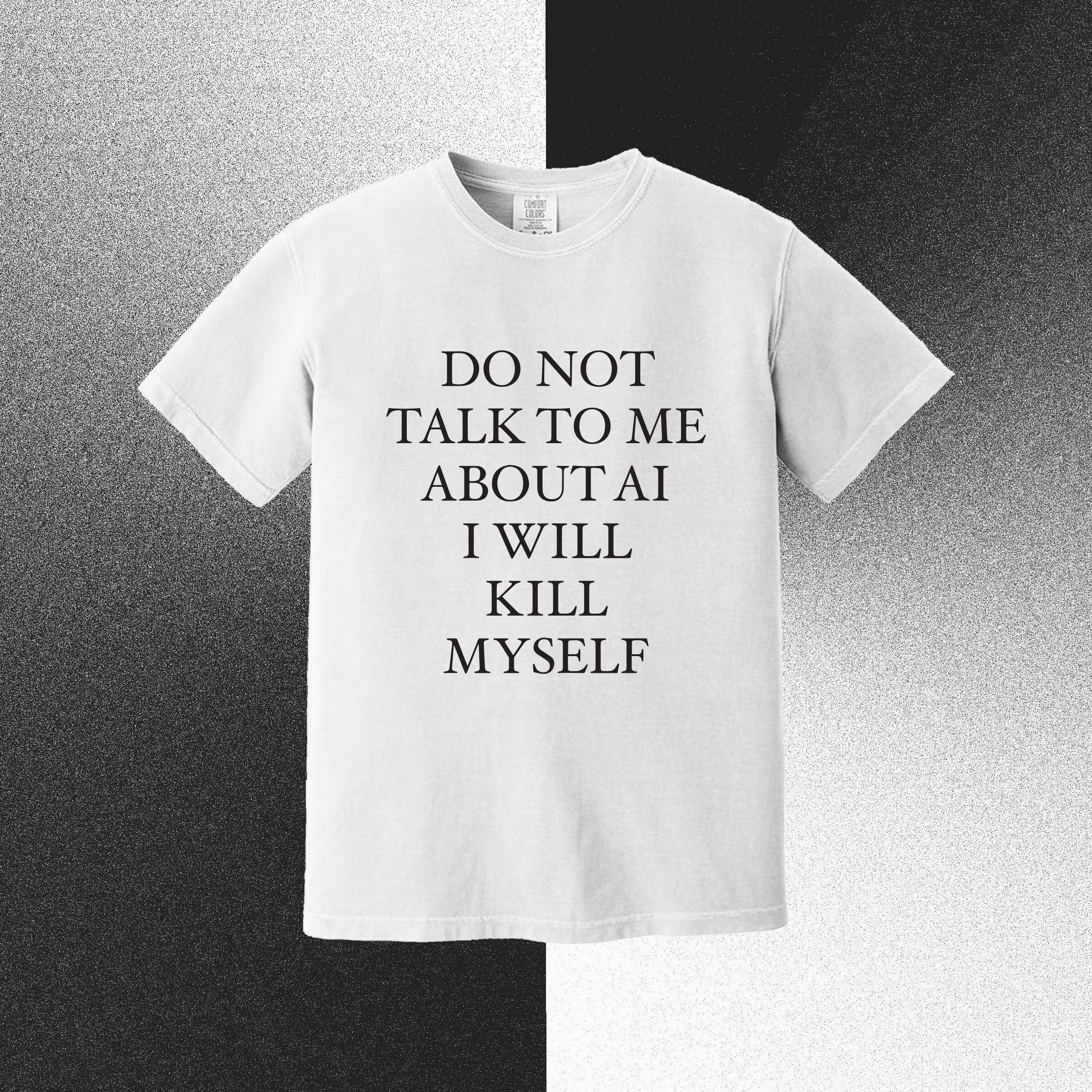
And yet somehow two of my three favorite novels from this year were distinctly responding to AI. (The other two: Low April Sun, by Constance Squires, which is about the Oklahoma City bombing and has nothing to do with AI, and Luminous by Silvia Park, which is broadly about robots and felt like a much better version of the movie A.I., which I haven’t watched in years, though I remember being generally underwhelmed with and then really delighted at how surprising and long its ending was).
The poet protagonist Jon-Perse in We Computers begins feeding poetry into his computer in the 80s. As the novel progresses, he asks his computer to produce poems of its own and eventually use the ghazals of the poet Hafez to generate biographical stories of Hafez’s life, a life of which there is little or no historical record beyond his poems. Somehow I still haven’t mentioned that the novel is narrated by the computer program Jon-Perse fed this material into.
But more than AI, We Computers is deeply interested in the act of translation. And I don’t think it’s trying to make any grand statements about literary works generated by AI. I think the novel is more interested in using the concept of AI generated work to interrogate what translation means over the many gaps of language and time and culture and history (so much of which is vital to this book and I haven’t even a little bit touched on here).
Again, I don’t have any clear conclusions, but this book rules and I haven’t been able to stop thinking about it. And I want to recommend it but only if anything I said above sounds exciting to you.
I put We Computers on hold at the library! Thanks Bob!
Many thanks for this thorough book review, Bob!